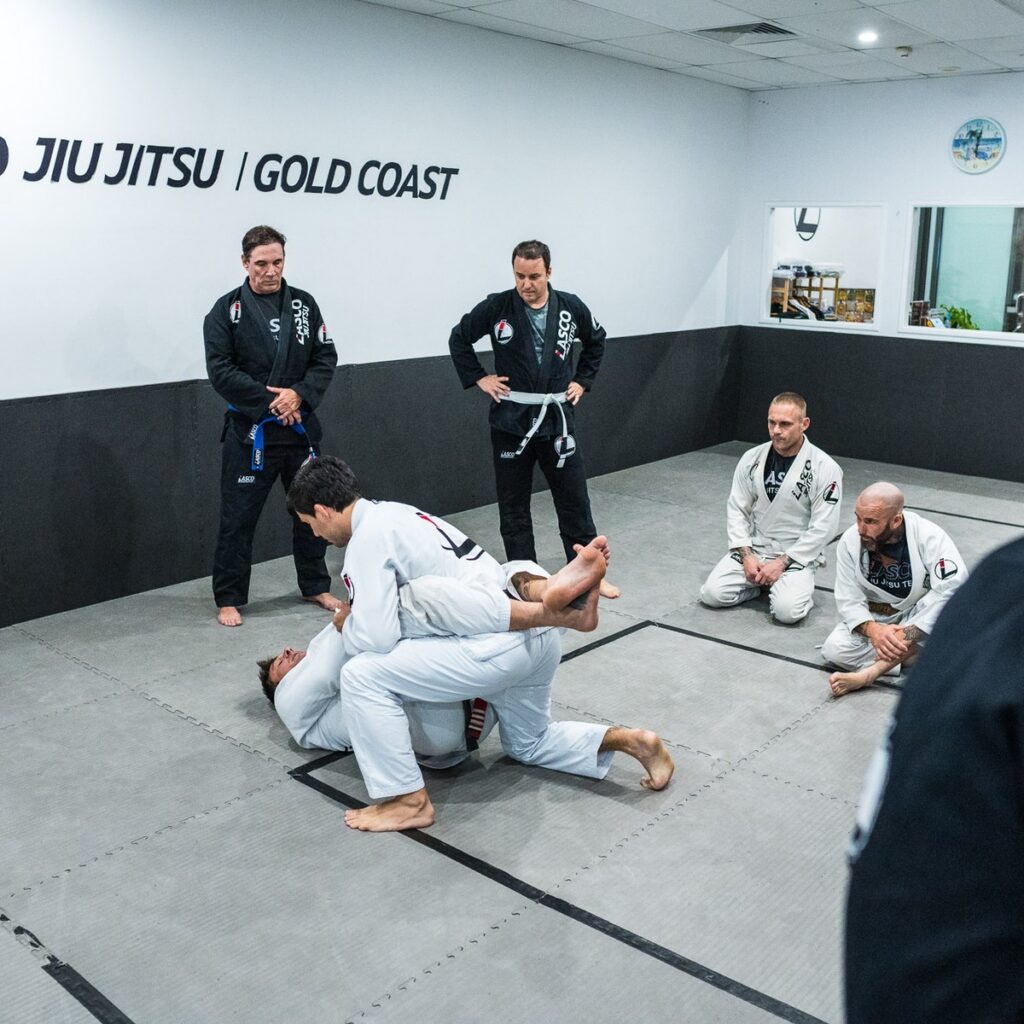
BJJ fundamentals for beginners start with a simple priority: establish a safe, stable position before chasing a submission. When you understand posture, base, frames, escapes and control, techniques become easier to remember and you can make better decisions under pressure. Submissions matter, but they work best as the final step of a sequence rather than the first idea you reach for.
This approach is especially useful for new students who want to build confidence without feeling that they must learn everything at once. At Lasco Jiu Jitsu in Varsity Lakes, the goal is to help beginners develop a dependable foundation they can use in drilling, positional practice and sparring.
What does “position before submission” mean?
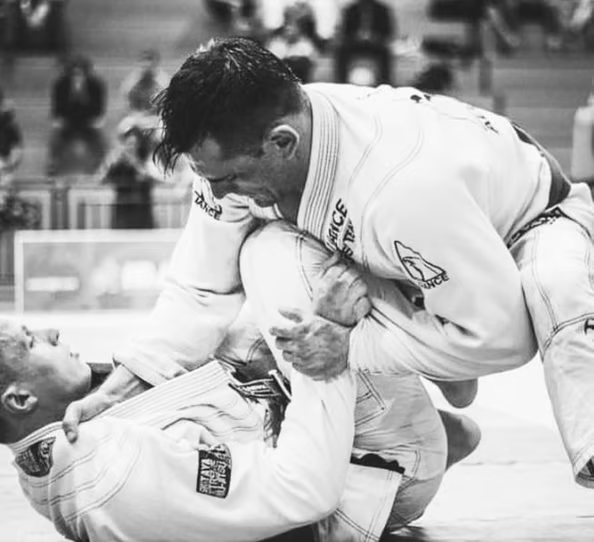
In Brazilian Jiu Jitsu, every exchange has a position. You might be standing, playing guard, passing someone’s legs, controlling from side control or mount, or working to escape from underneath. Each position gives both people different opportunities and risks.
“Position before submission” means improving your control and reducing your partner’s options before attempting a finishing technique. If your balance is unstable or your partner still has plenty of space to move, an attack may be easy to defend. Worse, reaching too early can cost you the position you worked to gain.
For a beginner, the principle creates a clear decision-making order:
- Recognise the position.
- Make yourself safe with posture, base and frames.
- Improve or recover your position.
- Control movement without relying on strength alone.
- Attack only when the position supports it.
You do not need to perform these steps perfectly. The value is in knowing what deserves your attention first.
Five core BJJ fundamentals beginners should learn
1. Posture and base
Posture is the alignment that helps you resist being pulled, folded or tipped. Base is how you place your weight and points of contact so you can remain balanced while moving. Together, they help you stay composed rather than reacting with tension.
Good posture is not one rigid shape. It changes with the position. The practical question is: can you move, breathe and respond without being easily unbalanced? During drilling, notice where your head, hips, knees and hands are placed. Small adjustments often make a technique feel much more stable.
2. Frames and useful space
A frame uses the structure of your body to manage distance. When you are underneath, correctly placed forearms, elbows, knees or shins can help prevent an opponent from settling all their weight on you. Frames are not about pushing as hard as possible; they create enough space for your hips and shoulders to move.
Beginners often try to bench-press a partner away. That can be tiring and may leave the arms extended. A better habit is to build a strong structure, connect the elbows and knees where appropriate, and use the space to recover a safer position.
3. Escapes and guard recovery
Learning how to leave a difficult position is one of the most valuable early skills. Escapes teach timing, hip movement, framing and patience. They also reduce the feeling that being underneath means the round is already lost.
Focus on the first problem in front of you. Protect vulnerable space, rebuild your structure, move your hips and recover guard or come to a more neutral position. Our guide to BJJ sparring for beginners explains how controlled rounds can help you practise these decisions without turning every exchange into a contest.
4. Control before attack
Top control is active. It involves balance, pressure, awareness and the ability to follow movement. Squeezing harder is rarely the complete answer. A beginner benefits more from learning how to distribute weight, maintain useful connections and anticipate the direction of an escape.
Before attacking, ask: is my partner controlled, or am I holding on with effort? Can I adjust if they bridge, turn or create a frame? If the answer is no, improving the position is usually the better choice.
5. Safe tapping and communication
Tapping is part of training, not a failure. It lets partners practise techniques while protecting each other. Tap clearly and early when you are caught, and release immediately when your partner taps. If you are unsure about a movement, ask the coach or your training partner before increasing intensity.
These habits sit alongside the practical standards covered in our BJJ etiquette guide for beginners. Respectful communication helps make the mat a better learning environment for everyone.
Why chasing submissions too early can slow progress
Submissions are memorable, so it is natural for a new student to focus on them. The difficulty is that a submission attempted from poor control often becomes a strength contest. You may hold your breath, rush details or lose balance when your partner defends.
A fundamentals-first approach gives you more useful feedback. If you lose a position, you can review where your posture, base or connection changed. If an escape works, you can identify the frame and movement that created space. These lessons transfer across many techniques.
It also makes training less overwhelming. Instead of trying to recall a long list of moves, you can return to a few reliable questions: Am I safe? Where is my base? Do I have frames? Can I improve the position? That simple checklist helps organise what you learn in class.
How to practise fundamentals during drilling
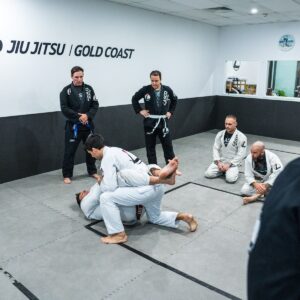
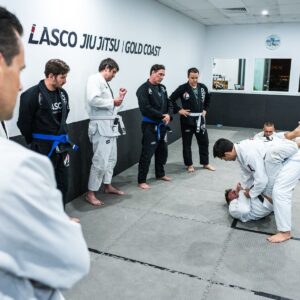
Drilling is most useful when you pay attention to purpose, not just the order of steps. After the coach demonstrates a technique, identify the problem it solves and the position where it begins. Then work with your partner at a pace that lets both of you feel the important details.
- Start accurately. Reset to the correct position before each repetition.
- Use controlled resistance. Let the movement become familiar before adding realistic reactions.
- Notice the connection points. Pay attention to grips, frames, hip position and weight distribution.
- Ask a specific question. If something fails, explain exactly where you lose balance or control.
- Practise both sides. One side may feel less coordinated, but both deserve attention.
If you are preparing for your first session, read what to expect in your first BJJ class in Varsity Lakes so the arrival, class structure and training environment feel more familiar.
What should a beginner focus on during sparring?
During beginner sparring, choose one or two goals connected to the position rather than measuring success only by submissions. From underneath, your goal might be to build frames and recover guard. From the top, it might be to maintain balance while your partner tries to create space.
Slow down enough to recognise what is happening. If you lose a position, continue safely and make a mental note of the moment it changed. After the round, a short, respectful question can be more valuable than trying to remember every exchange.
Consistency also matters. Check the current Lasco Jiu Jitsu class timetable and choose sessions that fit realistically around work, family and other commitments. Regular practice gives fundamental movements time to become familiar.
A practical mindset for your first months of BJJ
Progress in Brazilian Jiu Jitsu is rarely a straight line. Some classes will feel clear; others will introduce positions that seem completely new. A useful beginner mindset is to look for small signs of understanding: recognising a position earlier, remembering to protect your posture, using a frame before pushing, or staying calm long enough to begin an escape.
You do not need to compare your timeline with another student’s. Training partners may arrive with different fitness, sporting experience, mobility and schedules. Focus on learning safely, listening to coaching and becoming a little more organised in familiar positions.
For students in Varsity Lakes, Robina, Burleigh Heads, Reedy Creek and across the Gold Coast, a local training routine can make that consistency easier to maintain.
Frequently asked questions
Do I need to be fit before starting BJJ?
No. You can begin by working at a manageable pace and building familiarity with the movements. Let the coach know that you are new, take breaks when needed and focus on technique rather than trying to match someone else’s intensity.
Which BJJ position should a beginner learn first?
There is no single position that covers every situation. Beginners benefit from learning how to recognise common top and bottom positions, then developing posture, frames and one dependable escape or control concept in each.
Should beginners practise submissions?
Yes, with coaching and controlled partners. The key is to understand the position that supports the submission, apply it gradually and release immediately when a partner taps.
How can I remember techniques after class?
Write down the starting position, the main problem and two or three key details rather than trying to record every movement. In the next class, ask a focused question if one step still feels unclear.
Is Gi or No-Gi better for learning fundamentals?
Both can teach posture, base, movement, control and escapes. The grips and pace can differ, but the underlying positional principles remain valuable. Choose sessions that suit your goals and availability, or experience both over time.
Build strong BJJ fundamentals at Lasco Jiu Jitsu
The best foundation is built through attentive coaching, safe practice and consistent time on the mat. Lasco Jiu Jitsu welcomes beginners looking to learn Brazilian Jiu Jitsu in a supportive local training environment in Varsity Lakes on the Gold Coast.
View the current class schedule, then message Lasco BJJ on WhatsApp to ask about getting started.