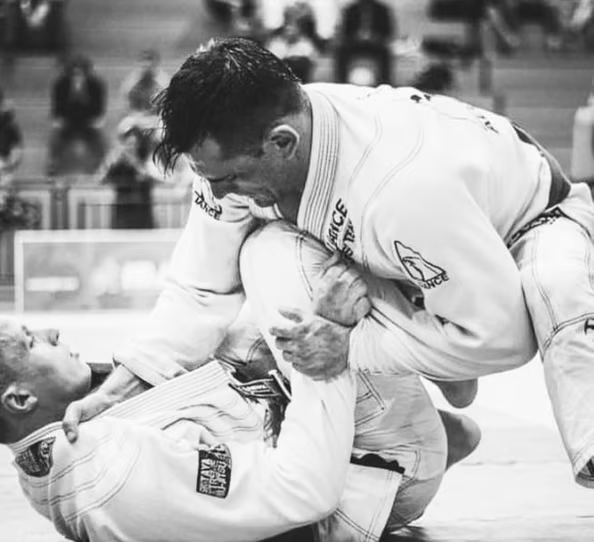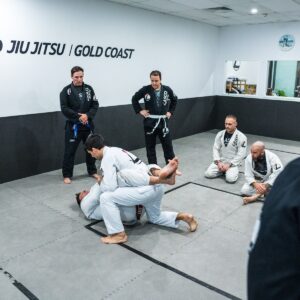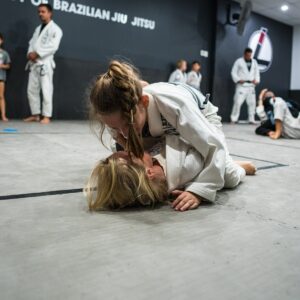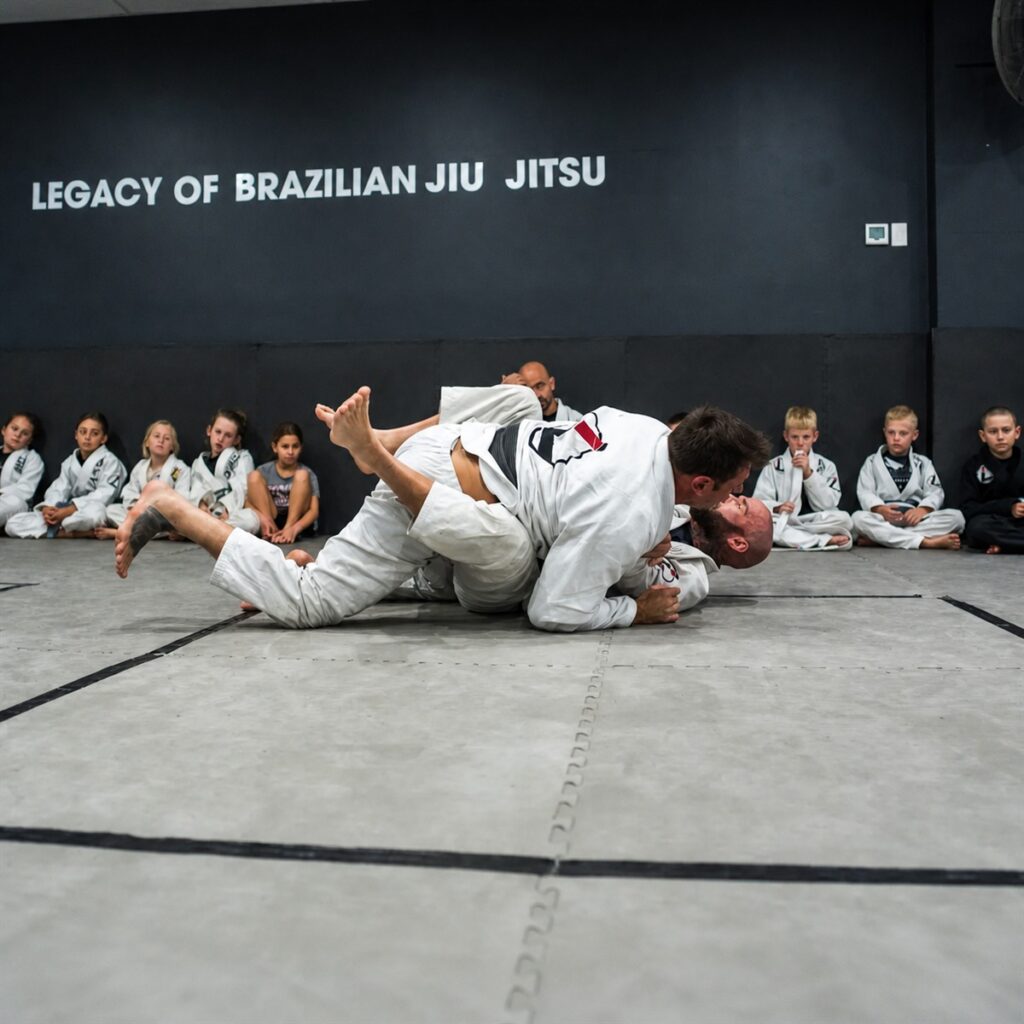
BJJ sparring, often called “rolling”, is controlled live practice where students apply techniques against a resisting partner. For beginners, the goal is not to win every exchange. It is to stay safe, recognise positions, practise calm decision-making and learn from each round.
If you are considering Brazilian Jiu Jitsu on the Gold Coast, understanding how sparring works can make your first sessions feel far less intimidating. A well-run beginner round should be organised, supervised and appropriate for your experience—not an uncontrolled fight.
What does sparring mean in Brazilian Jiu Jitsu?
In a technique lesson, your partner usually allows you to practise a movement step by step. During sparring, both people can move, defend and attempt techniques. That live resistance is what makes BJJ such a practical learning system, but it also means students need clear boundaries and good training behaviour.
A round may begin standing or from the knees, but many beginner sessions start from a specific position. Your coach might ask one person to escape side control while the other tries to maintain it, for example. This is known as positional sparring, and it gives new students a smaller problem to solve before they attempt a completely open round.
If you are still deciding where to train, our guide to choosing a safe and welcoming BJJ academy on the Gold Coast explains the signs to look for in the coaching, culture and training environment.
Do beginners have to spar straight away?
Not necessarily. The right time depends on the class structure, your comfort level and your coach’s judgement. Some beginners are introduced to light positional work early, while others spend more time learning basic movements and safety principles first.
You should be able to tell your coach that you are new, returning from a break or managing an injury. That information helps the coaching team choose an appropriate partner and level of intensity. It is also reasonable to watch a round if you do not yet understand the task.
For a broader picture of what happens when you first arrive, read what to expect on your first day at Lasco Jiu Jitsu.
Seven rules for safe and useful BJJ sparring
1. Tell your partner you are new
A quick introduction changes the tone of the round. Say how long you have trained and mention any area that needs care. Good partners do not treat a beginner round like a competition final; they help create enough resistance for both people to learn.
2. Tap early and clearly
Tapping is the normal signal that a submission has reached its limit. Tap your partner, the mat or use your voice when you cannot safely use a hand. There is no prize for waiting until a joint is under unnecessary pressure. After a tap, both partners release, reset and continue if appropriate.
3. Use technique before speed
Fast, explosive movement can hide technical mistakes and create avoidable collisions. Try to identify the position, protect your posture and use the technique you were taught. When you do not know what to do, slowing down is usually more useful than pushing harder.
4. Match the pace of the round
Intensity should be agreed, not assumed. A smaller partner, a first-week student or someone returning from injury may need a lighter pace. Matching your partner does not mean offering no resistance; it means using control and adjusting when the round becomes untidy.
5. Protect fingers, knees and the head
Avoid grabbing individual fingers, twisting out of a position without control or driving your weight unpredictably. Keep nails short, remove jewellery and make sure your uniform or training clothing is secure. Basic hygiene and tidy gear are part of protecting the whole team.
6. Stop if something feels wrong
If you feel sharp pain, become dizzy, notice blood or see an unsafe situation, stop the round. A brief pause is always better than trying to prove toughness. Tell the coach what happened so they can decide whether you should continue.
7. Ask one useful question afterwards
You do not need a complete review of every second. Choose one moment: “How did you keep passing my guard?” or “What should I protect first from side control?” A focused question is easier for your partner or coach to answer and gives you a practical idea for the next round.
What should you focus on during your first rounds?
Beginners often feel they must remember every technique at once. A simpler approach is to work through a short priority list:
- Breathe: holding your breath makes the round feel faster and more exhausting.
- Recognise the position: identify whether you are in guard, mount, side control or another familiar position.
- Protect yourself: keep your elbows connected, maintain posture and avoid offering easy submissions.
- Attempt one known technique: use the escape, guard retention movement or pass you have actually practised.
- Reset mentally: after a sweep, pass or tap, treat the next exchange as a fresh learning opportunity.
This approach is also why regular attendance matters. Each round becomes less confusing as the positions become familiar. Our article on why consistency beats talent in Brazilian Jiu Jitsu explores how steady practice supports long-term progress.
How hard should a beginner roll?
There is no single percentage that suits every partner or round. A better guide is whether you can move with control, breathe normally, respond to coaching and stop immediately when required. If your movement becomes frantic, reduce the pace and rebuild your position.
Experienced students may allow beginners space to attempt techniques, but that does not mean the round is unrealistic. They are often controlling the tempo so the newer student can learn safely. Treat that opportunity with respect rather than responding with sudden force.
Choosing the right class and training partner
A supportive academy should pair students thoughtfully and make the expectations of sparring clear. Coaches should be visible, approachable and willing to intervene when a round becomes unsafe. New students should not be left to guess which techniques are appropriate for their level.
Lasco Brazilian Jiu-Jitsu is based at 4/11 Crown Court in Varsity Lakes and serves students from nearby Gold Coast communities, including Robina, Burleigh Heads and Reedy Creek. You can check the current BJJ class timetable before planning your visit.
Frequently asked questions about BJJ sparring
What is the difference between drilling and sparring?
Drilling is repeated technical practice with a partner who provides a predictable response. Sparring involves live resistance and changing positions. Positional sparring sits between the two by giving both partners a specific starting point and objective.
Is it normal to tap often as a beginner?
Yes. Tapping is a safety skill and a normal part of training at every level. Beginners may tap more often because they are still learning to recognise danger and escape positions. Each reset provides another chance to practise.
Can I ask for a lighter round?
Yes. Tell your partner and coach what you need before the round begins. Clear communication helps everyone train productively. If the agreed pace is not respected, stop and speak with the coach.
Do I need to be fit before I start sparring?
No particular level of fitness guarantees an easy first round. BJJ uses unfamiliar movements and problem-solving under pressure, so even active beginners may tire quickly. Build your training gradually, rest when needed and follow your coach’s guidance.
What should I wear for my first class?
Wear clean, comfortable gym clothing without zips or hard fittings. If the session requires a gi, contact the academy before attending so you know what is available and what the class expects.
Start with a supervised introduction
You do not need to understand sparring before walking through the door. A good introduction lets you meet the coach, discuss your goals and experience the training environment at an appropriate pace.
Ready to see how BJJ training works in Varsity Lakes? Book your introductory class at Lasco Jiu Jitsu and let the team know that you are a beginner.