BJJ etiquette for beginners is simple: train safely, respect your partner, listen to the coach and treat every round as a chance for both people to learn. You do not need to know every tradition before your first class. A few practical habits will help you feel comfortable, protect your training partners and become a welcome part of the academy.
At Lasco Jiu Jitsu in Varsity Lakes, beginners from across the Gold Coast—including Robina, Burleigh Heads and Reedy Creek—can expect a structured training environment. Understanding the basic rules before you arrive removes uncertainty and lets you focus on learning.
Why BJJ etiquette matters
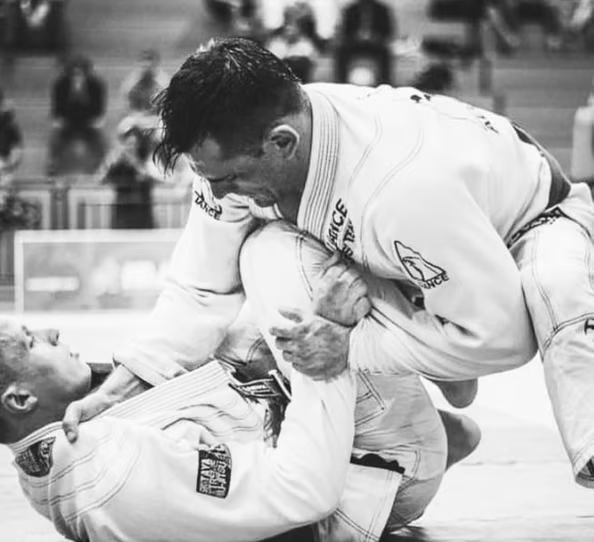
Brazilian Jiu Jitsu is practised at close range. Students share mat space, work with partners and apply techniques that depend on trust. Good etiquette is therefore not just about formality. It supports safety, hygiene, useful practice and a positive academy culture.
Beginners sometimes worry that they will accidentally break an unwritten rule. In reality, respectful behaviour matters far more than perfect knowledge. Coaches expect new students to ask questions and learn the routines over time.
10 essential BJJ etiquette rules for beginners
1. Arrive with enough time to get ready
Rushing into a class after it has begun can make it harder to settle, hear the opening instructions and join the group safely. Check the current Lasco BJJ schedule, plan your journey and aim to arrive with enough time to change and introduce yourself.
If you are delayed, enter quietly and wait for the coach to show you where to join. A brief acknowledgement is usually enough; there is no need to disrupt the lesson with a long explanation.
2. Wear clean, suitable training gear
Clean clothing helps make close-contact training comfortable for everyone. For a first trial, the academy advises comfortable gym clothing, and a clean gi can be provided when attending a gi class. Avoid jewellery, hard zips and anything that could scratch or catch.
Keep fingernails and toenails trimmed. If your clothing becomes damaged during training, stop and fix the issue before continuing.
3. Keep yourself and the mat hygienic
Shower regularly, cover minor cuts securely and do not train when you have a contagious skin condition or feel unwell. Wear footwear whenever you leave the mat area, then remove it before stepping back onto the mats.
These habits are small, but they protect the whole group. If you are unsure whether it is appropriate to train, contact the academy before class rather than guessing.
4. Listen while the technique is being shown
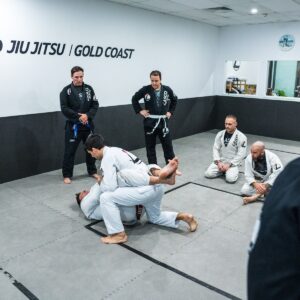
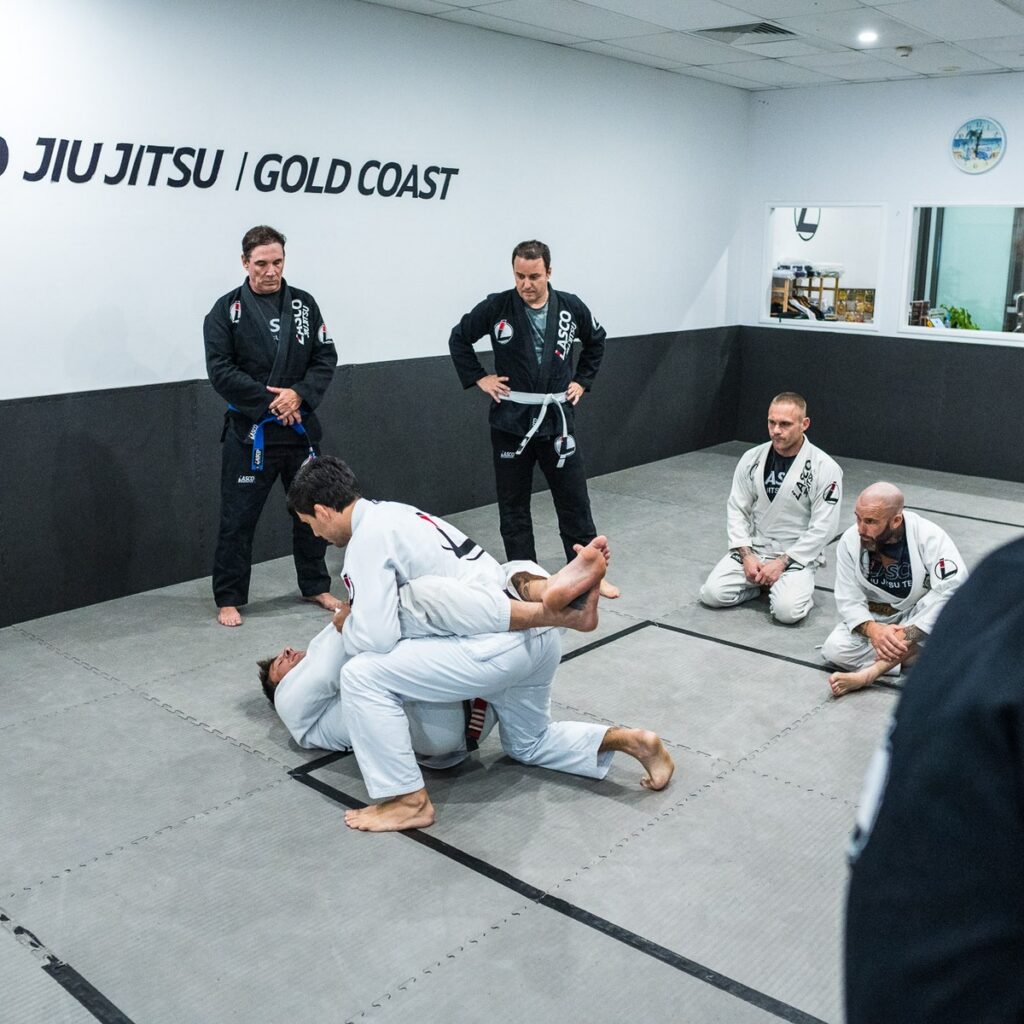
During a demonstration, give the coach your attention and keep side conversations to a minimum. Try to watch the full sequence before beginning. Details such as hand position, posture and direction often make the difference between forcing a movement and applying it efficiently.
Questions are welcome when they clarify the technique. Ask at an appropriate pause, and keep the question connected to what the group is learning.
5. Be a helpful training partner
Your partner is not a piece of equipment or an opponent you must defeat. They are helping you learn. During drills, provide the level of movement or resistance requested by the coach. Going completely limp may be unhelpful, while resisting at full strength can prevent either person from practising the technique.
Communicate clearly. If a position is uncomfortable, you need to slow down or you did not understand the drill, say so.
6. Learn to tap early and respect every tap
Tapping is a normal safety tool, not a sign of failure. You can tap your partner, the mat or use your voice when your hands are unavailable. Beginners should tap before pain becomes intense and restart safely.
The moment your partner taps, release the technique. Do not wait to confirm that the submission was fully secured. A verbal request to stop must be treated exactly the same way.
7. Control your pace during sparring
Live rounds are for practising decisions under resistance, not proving toughness. Match the intensity agreed with your partner and avoid sudden uncontrolled movements. Prioritise stable positions, escapes and breathing instead of chasing every submission.
If you are new to rolling, read our guide to BJJ sparring for beginners. It explains how to stay safe and make each round useful.
8. Respect differences in size and experience
A smaller, older or less experienced partner may need a different pace. Good training partners adjust without making assumptions or turning the round into a demonstration of strength. Technique develops when both people can move, think and learn.
Tell the coach about injuries or relevant limitations before training. You do not need to share unnecessary personal details—only the information needed to help organise safe participation.
9. Keep coaching to the coach
Helping a partner remember the demonstrated steps can be useful, but avoid giving long technical lectures or inventing corrections. Beginners can easily become confused when several versions of a movement are introduced at once.
If you and your partner are stuck, ask the coach. That gives both of you a clear answer and keeps the class aligned with the lesson.
10. Leave your ego off the mat
Everyone gets caught in techniques, forgets steps and has difficult rounds. Avoid keeping score in ordinary training or making excuses after a position goes wrong. Thank your partner, notice what happened and use the experience to guide your next question.
This approach makes progress more sustainable. Consistency and curiosity usually serve a beginner better than trying to win every exchange.
What happens if you make a mistake?
Pause, apologise briefly if needed and correct it. Most etiquette mistakes are easily resolved when a student responds calmly. Coaches do not expect newcomers to know every routine on day one.
What matters is how you respond to feedback. Listening without defensiveness and making the adjustment shows respect for the group. If you are preparing for your first visit, our guide to what to expect on your first day at Lasco Jiu Jitsu covers the experience from arrival to the end of class.
Etiquette for parents watching a kids BJJ class
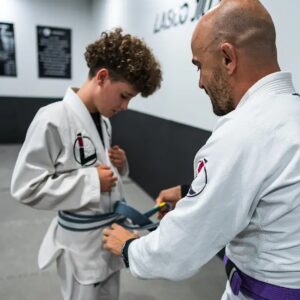
Parents can support children by arriving on time, helping them bring suitable clothing and allowing the coach to lead the session. Coaching from the sideline may conflict with the lesson and make it harder for a child to focus.
After class, ask open questions such as what they enjoyed or learned. Celebrate listening, effort and respectful partnership—not only successful techniques. Lasco’s kids programs are structured by age, so families should use the official academy information and schedule to choose the appropriate next step.
Frequently asked questions
Do I need to bow before entering the mat?
Academies can have different traditions. Watch the class routine and follow the coach’s guidance. Being attentive and respectful matters more than knowing every custom before you arrive.
Is it rude to decline a sparring round?
No. You can decline politely if you need to rest, manage an injury or do not feel comfortable. Tell the coach if you need help choosing an appropriate partner.
Should beginners ask higher belts to train?
Academy customs vary, so follow the coach’s directions for pairing. When invited to work with someone more experienced, listen carefully and use the round as an opportunity to learn.
Can I wear jewellery during BJJ?
Jewellery and hard accessories can scratch, catch or break during close-contact training. Remove them before stepping onto the mat.
What should I do after class?
Thank your partners, collect your belongings and take your training clothing home to wash. If you have a question about the lesson, ask the coach at an appropriate time.
Start your BJJ journey with confidence
Good etiquette does not require perfection. Arrive prepared, keep your gear clean, listen, communicate and look after your partners. Those habits will help you learn safely in gi or no-gi classes and contribute positively from your first session.
Ready to experience BJJ in Varsity Lakes? Register for a free BJJ trial at Lasco Jiu Jitsu and meet the team.