If you are comparing gi vs no-gi BJJ for beginners, the simplest answer is this: you can start with either. Gi classes use the traditional jacket and trousers, with grips on the uniform playing an important role. No-gi classes use a rashguard and shorts, so control relies more on body position, underhooks and movement. The best first choice is usually the class you can attend consistently and enjoy enough to keep coming back to.
For beginners around Varsity Lakes, Robina, Burleigh Heads and Reedy Creek, both formats can build practical skills, fitness and confidence. The differences matter, but they do not need to delay your first class. This guide explains what changes, what stays the same and how to make a sensible choice.
What is gi BJJ?
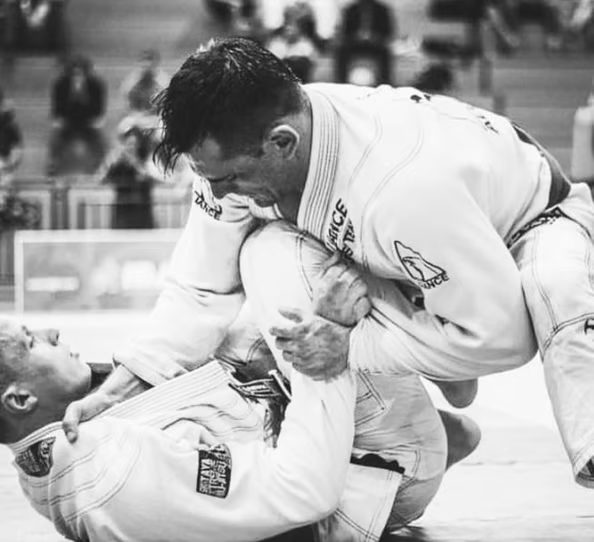
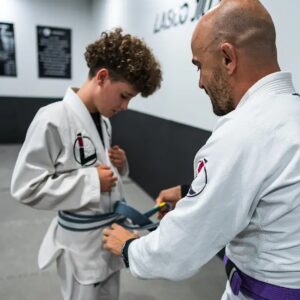
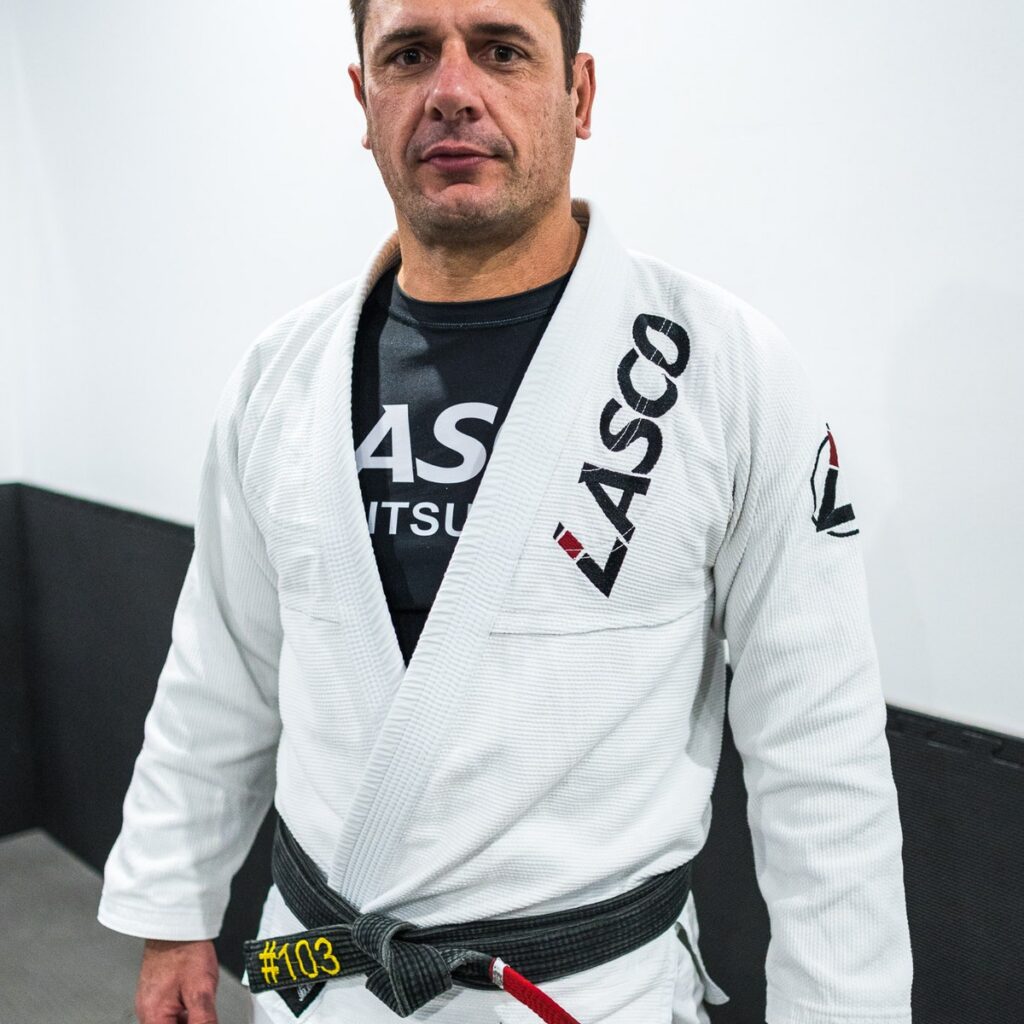
Gi Brazilian Jiu Jitsu is trained in a reinforced jacket, trousers and belt. The uniform gives both training partners extra gripping options. You may learn to control sleeves, collars, lapels and trouser fabric while working through positions such as guard, side control and mount.
Those grips can make the pace feel more methodical. A beginner often has a little more time to recognise a position, secure a grip and think about the next step. Gi training also rewards attention to posture, grip placement and efficient use of leverage.
The gi can be unfamiliar at first, but that is normal. You do not need to understand every grip before starting. A well-structured beginner class introduces the basics progressively.
What is no-gi BJJ?
No-gi BJJ is usually trained in fitted athletic clothing such as a rashguard and grappling shorts. Because there is no jacket to hold, students use grips and connections around the body, including wrist control, head position, underhooks and overhooks.
No-gi rounds can feel faster and more fluid because there is less friction and fewer fabric grips to slow movement. Beginners learn to stay connected through positioning rather than relying on the uniform. This can make timing, balance and body awareness especially noticeable.
Faster does not automatically mean harder. Good no-gi training is still controlled, technical and suitable for newcomers when the class is appropriate for their level.
Gi vs no-gi BJJ for beginners: the main differences
Clothing and grips
The most obvious difference is what you wear and what you are allowed to grip. In gi BJJ, the uniform is part of the technique. In no-gi, grabbing clothing is not part of normal practice, so students connect directly to the body.
Pace and movement
Gi exchanges often include more friction and grip-based control. No-gi movement may be more slippery and transitions can happen quickly. Neither style is better for every person; they simply ask you to solve similar grappling problems in different ways.
Technical emphasis
Both formats teach positional control, escapes, submissions, balance and safe training habits. Gi classes add a broad set of collar, sleeve and lapel grips. No-gi classes place more emphasis on body locks, hooks, head position and movement without fabric control.
Equipment
A gi is a specialised uniform. No-gi clothing is lighter, but it still needs to be suitable for close-contact training: fitted, secure and free from hard zips, pockets or anything that could catch. If you are unsure what to bring, check the academy guidance before class.
Which format should you choose first?
Start with the option that fits your real life. Review the current Lasco Jiu Jitsu schedule and identify the class you can attend regularly without turning training into a weekly scramble. Consistency matters more than making a perfect theoretical choice.
Gi may suit you if you enjoy detailed grip work, a more traditional martial arts setting and methodical positional problem-solving. No-gi may appeal if you prefer lighter training clothing, quicker transitions and a style that feels closer to wrestling-based movement.
If both are available to you, trying both over time can broaden your understanding. Concepts learned in one format often clarify the other. For example, gi grips can teach patience and control, while no-gi can expose whether your body positioning remains effective when fabric grips disappear.
Do you need to get fit before starting?
No. You can begin BJJ at your current fitness level and build capacity through regular, appropriately paced training. A first class is not a test of whether you already belong on the mat.
Beginners should focus on listening, moving safely and learning the basic positions. It is normal to pause, ask questions and work at a manageable pace. If uncertainty about the session itself is holding you back, read what to expect in your first BJJ class.
What beginners should focus on in either class
- Safety: learn how and when to tap, and release immediately when your partner taps.
- Position before submission: understand stable control and escapes before chasing finishes.
- Breathing: avoid holding your breath or using maximum effort for every movement.
- Good partnership: train cooperatively, communicate and match the intensity of the exercise.
- Consistency: regular attendance makes techniques and positions feel familiar.
The environment matters as much as the uniform. A supportive academy should make expectations clear, pair students thoughtfully and encourage controlled learning. Our guide to choosing a safe and welcoming BJJ academy on the Gold Coast offers useful points to consider.
Can children train gi and no-gi BJJ?
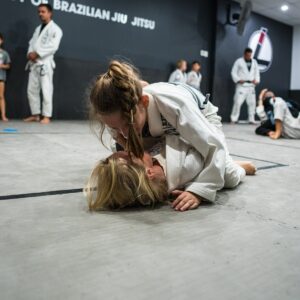
Children can learn through either format when sessions are designed for their age and experience. The most important factors are safe instruction, clear boundaries, positive coaching and a class structure that keeps children engaged.
Parents should look at the actual program and current timetable rather than assuming one uniform makes a class more or less suitable. You can learn more about Lasco, its approach and location on the Lasco Jiu Jitsu home page.
Frequently asked questions
Is gi or no-gi easier for a complete beginner?
Neither is universally easier. Gi provides more grips and can slow some exchanges, while no-gi has fewer clothing grips but may move faster. The quality of instruction, class level and your consistency will have a greater effect on your early experience.
Can I switch between gi and no-gi later?
Yes. Many students train both. The core principles of posture, balance, control, escapes and submissions transfer, even though the grips and pace change.
What should I wear to my first class?
What you need depends on the class format. Check the academy’s current guidance when you register so you arrive in safe, appropriate clothing.
Is no-gi BJJ better for self-defence?
No single training format guarantees a result in a real situation. Gi and no-gi both develop grappling awareness and control, but training should never be treated as a guarantee of safety.
How often should a beginner train?
Choose a sustainable routine that works with your responsibilities and recovery. Regular attendance is more useful than an ambitious schedule you cannot maintain.
Try your first BJJ class on the Gold Coast
You do not need to settle the gi vs no-gi debate before stepping onto the mat. Look at the timetable, choose a beginner-friendly session that fits your week and experience the training for yourself.
Ready to begin? Register for a free BJJ trial at Lasco Jiu Jitsu and take your first step in Varsity Lakes.